
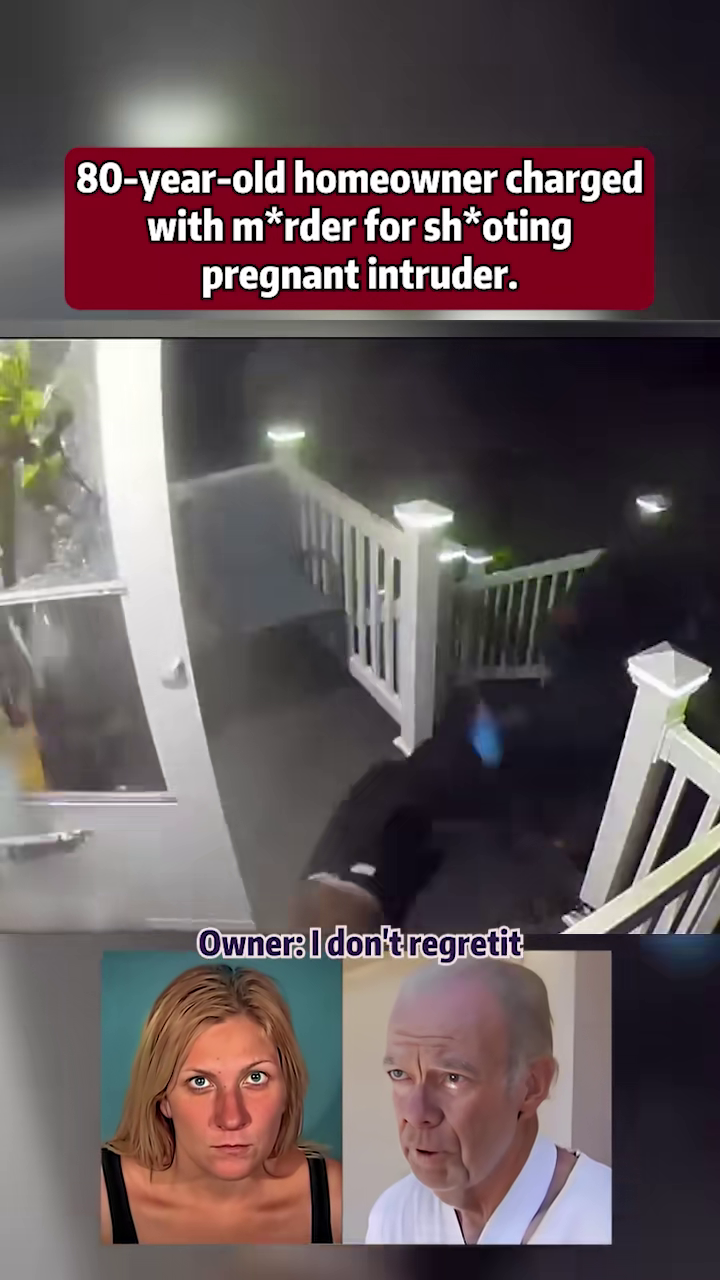
In July 2014, a quiet neighborhood in Long Beach, California, became the center of a national debate on the limits of self-defense. The incident involved 80-year-old Thomas Greer and two intruders who broke into his home in the middle of the night. What followed was a series of events that led to the death of one intruder, the arrest of another, and a complex legal discussion regarding whether an elderly man went too far in protecting his property.
The story has recently resurfaced on social media, sparking renewed interest in the rights of homeowners and the moral gray areas of “Stand Your Ground” and “Castle Doctrine” laws. While many view Greer as a hero who stood up to criminals, others point to his own admissions as evidence of an unnecessary escalation of violence.
The Night of the Incident
According to police reports and Greer’s own testimony, the incident began late on a Tuesday night. Thomas Greer was alone in his home when 28-year-old Andrea Miller and 26-year-old Gus Adams broke in. This was reportedly not the first time Greer’s home had been targeted; he claimed he had been burglarized multiple times in the preceding months.
The intruders confronted Greer in his home, and the situation quickly turned violent. Greer reported that the pair assaulted him, knocking him to the floor and causing several injuries, including broken ribs. Despite his age and the physical trauma he was enduring, Greer managed to navigate to a back room where he kept a .22-caliber revolver.
When Greer emerged with the firearm, the power dynamic shifted instantly. The two intruders, seeing that their victim was now armed, turned and fled through the garage.
The Controversial Shooting
The legal and moral controversy of the Thomas Greer case centers on what happened after the intruders left the house. Rather than staying inside and calling the police, Greer pursued Miller and Adams into the alleyway behind his home.
As they fled, Greer fired his weapon. He hit Andrea Miller twice—once in the back. During the pursuit, Miller allegedly cried out, “Don’t shoot me! I’m pregnant! I have a baby!”
In a televised interview shortly after the incident, Greer was chillingly candid about his response to her plea. “She says, ‘Don’t shoot me, I’m pregnant! I’m going to have a baby!’ And I shot her anyway,” Greer told a local news station. He went on to explain his rationale: “The lady didn’t run as fast as the man, so I shot her in the back so she’d stop running.”
Miller died at the scene. It was later revealed through an autopsy that she was not, in fact, pregnant.
Self-Defense or Retribution?
The primary question facing investigators and the District Attorney was whether Greer’s actions constituted lawful self-defense. In California, the “Castle Doctrine” allows residents to use deadly force inside their homes if they have a reasonable fear of imminent death or great bodily injury.
However, the law typically changes once the threat has retreated. When Miller and Adams fled the house and entered the alley, many legal experts argued that the “imminent threat” had ended. Shooting a fleeing suspect in the back is generally viewed as an act of retribution or vigilantism rather than self-defense under California law.
Greer’s own words complicated his defense. By stating that he shot her specifically to “stop her from running” and admitting that he ignored her plea for mercy, he moved the needle toward a premeditated act of violence.
The Prosecution’s Decision
Despite the controversial nature of the shooting, the Los Angeles County District Attorney’s office eventually decided not to file charges against Thomas Greer.
The decision was based on several factors:
-
The Initial Assault: Greer had been severely beaten by the intruders. His age (80) and physical condition made him a vulnerable victim.
-
The “Reasonable Person” Standard: A jury might find that a man who had just been assaulted in his own home was in a state of extreme fear and shock, clouding his judgment during the pursuit.
-
The Burglary Context: The intruders were committing a felony at the time of the incident.
While Greer was cleared of criminal wrongdoing, the surviving intruder, Gus Adams, was not so lucky. Under California’s “provocative act murder” rule, a person can be charged with murder if they participate in a crime that leads to the death of an accomplice. Because Adams’ actions (breaking into the home and assaulting Greer) directly led to Miller’s death, he was charged with her murder, in addition to burglary and robbery.
Public Reaction and the Ethics of the “Unregretful” Homeowner
The public reaction to the case was sharply divided. To many, Greer represented the “fed-up” citizen. In an era where crime rates in urban areas were a major political talking point, Greer became a symbol of a homeowner taking back control. His lack of remorse—summed up in his statement, “I don’t regret it”—was praised by those who believe that criminals forfeit their rights the moment they cross a stranger’s threshold.
Conversely, human rights advocates and legal scholars expressed concern over the precedent the case set. They argued that allowing an 80-year-old to shoot a fleeing woman in the back—regardless of her criminal actions—undermines the rule of law. If self-defense is extended to include “punishing” a fleeing suspect, the line between safety and street justice becomes dangerously blurred.
The “fake pregnancy” aspect added another layer of complexity. While Miller lied to save her life, the fact that she wasn’t actually pregnant served, for many, to further “villainize” her and justify Greer’s skepticism.
The Legal Landscape in 2024
Ten years later, the Thomas Greer case remains a cornerstone of discussions surrounding the Second Amendment and home protection. Since 2014, several states have expanded “Stand Your Ground” laws, while others have moved to restrict them.
In California, the law remains relatively consistent: you have the right to defend your home, but the moment you become the aggressor or the “pursuer,” you enter a legal minefield. Greer’s case is often cited as a rare instance where a homeowner “crossed the line” but was spared prosecution due to his age and the brutality of the initial attack.
Conclusion
The Thomas Greer story is a harrowing reminder of the chaos that ensues when a home invasion occurs. It pits the right to safety against the sanctity of life, even the life of a criminal.
Greer passed away several years after the incident, but his interview remains a viral sensation, forcing every viewer to ask themselves the same question: If I were in his shoes—beaten, bruised, and terrified—how far would I go?
While the courts decided that Greer was not a murderer, the case serves as a cautionary tale. Protecting one’s home is a right, but the legal consequences of “shooting them anyway” can follow a person for the rest of their life.