
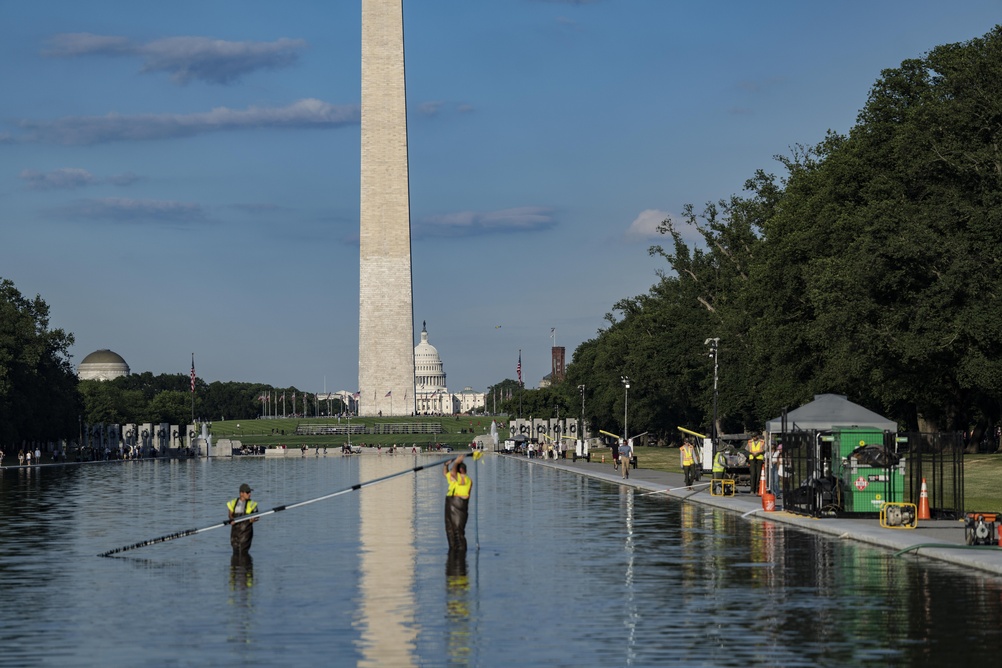
The Lincoln Memorial Reflecting Pool is meant to be a place of quiet contemplation, but a recent botched restoration project has turned the historic landmark into a controversial legal battleground. Following a costly attempt to stop stubborn algae blooms, a newly applied blue sealant on the pool floor quickly began to fail and peel apart. Now, that loose paint has sparked a sudden wave of arrests, with three individuals facing misdemeanor charges and a former Olympian fighting a felony indictment for interacting with the damaged liner.
The Details of the Misdemeanor Charges

In June 2026, the Lincoln Memorial Reflecting Pool became the center of a surprising legal case. Police arrested three people: Cameron Thiers, Sophie Dennison-Gibby, and Justin Carreno. According to court records, the group was seen on a Saturday afternoon picking at the pool’s damaged bottom, peeling off loose pieces of newly applied blue paint.
The police evidence comes largely from body-camera footage. In court documents, one officer stated they “witnessed Carreno reach down into the reflecting pool and pull up a piece of the blue paint.” Another officer reported that Thiers “admitted to removing a piece of blue sealant from the Reflecting Pool and still had it in his hand when I made contact with him.” Police also found a piece of the pool liner in Dennison-Gibby’s purse.
The arrests were a coordinated effort. U.S. Park Police worked alongside officers from several states—including Texas, Oklahoma, Montana, and California—who were assigned to patrol the area.
The three individuals appeared in D.C. Superior Court and pleaded not guilty to misdemeanor charges of destroying property worth less than $1,000. A judge has ordered them to stay away from the Reflecting Pool. If convicted, each person faces a fine of up to $1,000 and up to 180 days in jail.
Importantly, police did not accuse Thiers, Dennison-Gibby, or Carreno of using tools to cut the pool’s lining on purpose. This detail is important, as the full story of how the pool was actually damaged involves other factors that go beyond this single incident.
How a Multimillion Dollar Renovation Went Wrong
To understand how the Reflecting Pool’s liner ended up in pieces, it helps to look at the site’s recent history. The National Park Service (NPS) recently completed a multimillion-dollar restoration of the pool. For years, the shallow water struggled with a persistent issue: thick algae blooms. This algae turned the water a murky green, clogged the filtration systems, and made it difficult to maintain the monument’s iconic, mirror-like surface.
To combat the algae, contractors applied a new, bright blue sealant to the bottom of the pool. The goal was to create a smooth surface that would be easier to scrub clean and would prevent algae from taking root in the concrete.
However, the fix did not go as planned. Shortly after the pool reopened, the new blue sealant began to fail. According to the National Park Service, the material did not bond correctly to the concrete base. Instead of staying flat, large sections of the paint bubbled up and peeled away from the floor of the pool.
Experts note that industrial sealants require strict temperature and moisture controls to cure properly. A failure in that bonding process leaves loose, rubbery flaps of material behind. It was these already-failing strips of paint that the three individuals were seen picking at. What started as an expensive effort to keep the historic monument clean ended up creating an entirely new maintenance headache—and left the pool’s lining vulnerable to passersby.
Sabotage Claims Without Proof
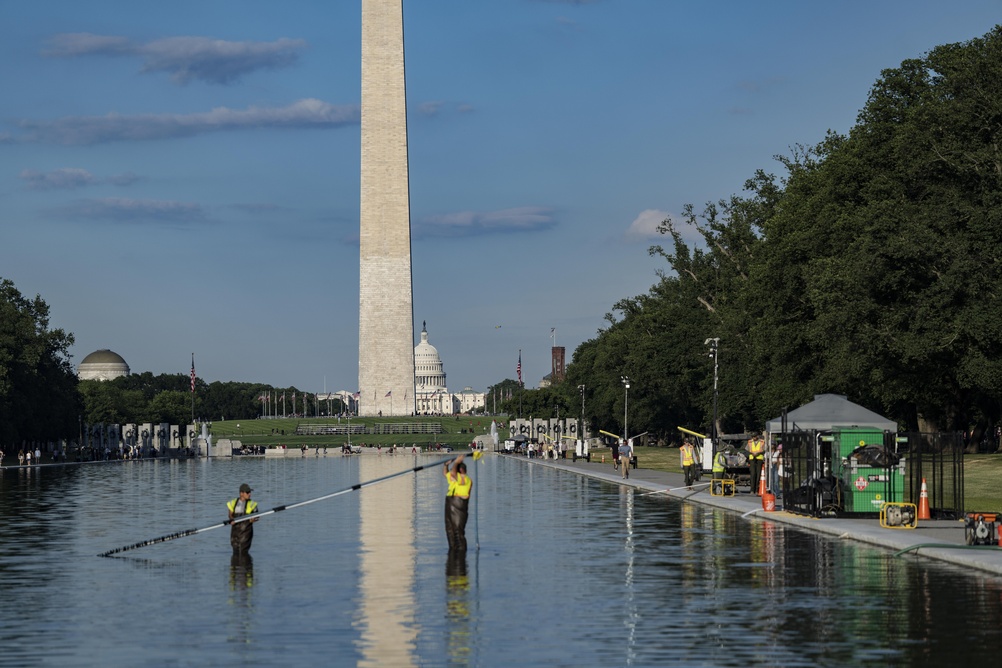
President Donald Trump has repeatedly stated that vandals intentionally caused the damage to the site. The president claimed that an unidentified individual used a blade to “put a 250 foot long gash into the beautiful facade.” He also alleged without providing substantiation that saboteurs dumped fertilizer into the water to intentionally trigger the green algae blooms.
To date, the administration has not provided evidence to support these claims of coordinated sabotage. Environmental and engineering experts have noted that the algae and peeling liner can be entirely explained by a failed chemical bonding process, rather than targeted vandalism.
Despite the lack of evidence for a coordinated attack, the administration’s stance has led to a massive shift in how the site is guarded. U.S. Attorney Jeanine Pirro, the top federal prosecutor for the District of Columbia, emphasized the government’s strict approach. She called the vandalism of national monuments “an affront to our shared history” and stated, “The law applies equally to everyone, and when it is broken, there are consequences.”
This firm stance explains the intense law enforcement presence at the Reflecting Pool. With authorities on high alert for saboteurs, officers from across the country were assigned to patrol the site. This created the strict environment that led to the immediate arrests of the three individuals who were seen pulling at the already loose paint.
Contrasting Case and a Felony Indictment
The situation facing the three individuals charged with misdemeanors is starkly different from another recent and high-profile arrest at the Reflecting Pool. David Hearn, a 67-year-old former Olympic canoe racer, is currently fighting a felony charge of malicious destruction of property stemming from a separate incident on June 19, 2026. Because prosecutors allege he caused more than $1,000 in damage, this felony carries a maximum penalty of 10 years in prison.
The government’s allegations against Hearn are severe. U.S. Attorney Jeanine Pirro accused him of “forcefully and violently” pulling up the pool’s bottom liner with both hands. She also stated that Hearn acted belligerently toward a National Park Service employee who asked him to stop.
Hearn’s account of the event paints a very different, and perhaps more relatable, picture of human curiosity. He stated that he stopped at the monument during a 64-mile bike ride and noticed the peeling sealant. He told reporters he simply reached into the water to see what the rubbery material felt like, touching a loose piece that was already detached from the concrete, and let go when a worker instructed him to do so.
His defense team has strongly criticized the felony indictment. Attorney Norm Eisen stated publicly after a recent court hearing that “It is not a crime to touch the Reflecting Pool.” Hearn’s lawyers argue that the prosecution is an attempt by the administration to shift blame for a botched, $16-million repair job that was already falling apart.
The legal proceedings have already shown a marked difference from the misdemeanor cases. While the three individuals charged with misdemeanors were ordered to stay away from the monument, the judge in Hearn’s case denied the prosecution’s request for a similar stay-away order. Hearn was released without conditions after pleading not guilty, leaving the courts to determine whether his actions were deliberate sabotage or simply the harmless curiosity of a passerby.
A Clear Warning for Monument Visitors
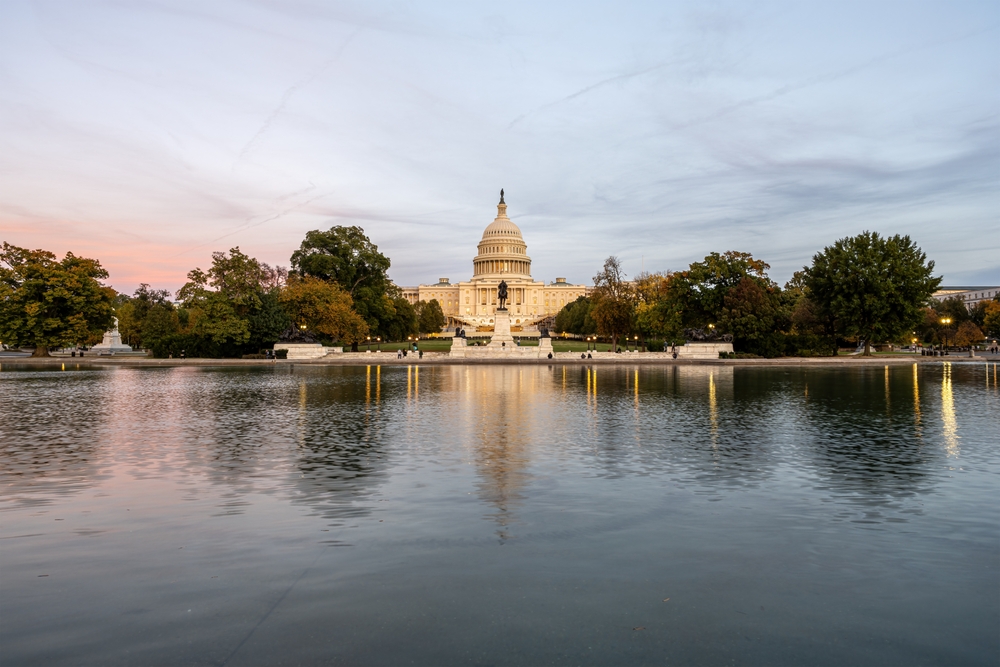
The ongoing legal disputes over the Lincoln Memorial Reflecting Pool highlight a difficult balance between preserving historic monuments and allowing public interaction. The multimillion-dollar restoration project was originally meant to protect the site for the nation’s 250th anniversary. Instead, the failed blue sealant and the resulting green algae blooms have created a situation where casual curiosity can lead to serious legal trouble. When taxpayers see a public landmark peeling apart, the instinct to inspect the damage is a common human reaction. However, as these recent arrests show, authorities are treating any physical contact with the damaged pool liner as a strict criminal offense.
The clear takeaway for anyone visiting the National Mall is to look but never touch. Law enforcement agencies are maintaining a heavy presence around the Reflecting Pool, and picking up a loose piece of debris can result in a fine, jail time, or a lengthy legal battle. Until the National Park Service resolves the underlying chemical bonding issues with the sealant, the site remains a highly monitored repair zone. Visitors must respect the physical boundaries of these monuments to avoid unintended legal consequences and ensure the space is safely preserved for everyone.