
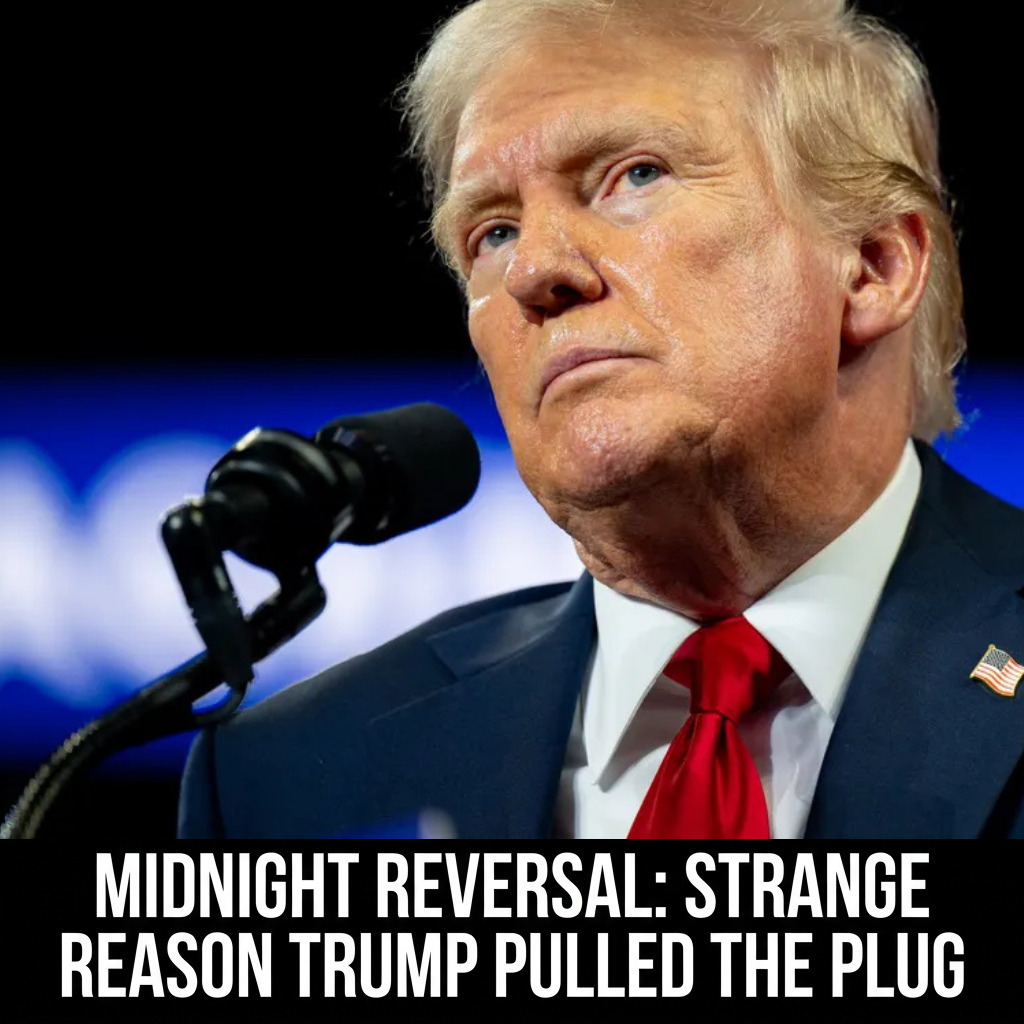
The Midnight Decree That Shocked the Pentagon
In the volatile theater of global geopolitics, minutes can separate absolute catastrophe from temporary peace. On a night that will be remembered as one of the most harrowing standoffs in recent memory, U.S. President Donald Trump upended global expectations by abruptly canceling a highly classified, multi-front military assault on Iran. The strikes, which were scheduled to execute under the veil of darkness, were called off following an series of urgent, eleventh-hour diplomatic interventions from prominent Gulf state leaders.
The announcement, delivered via a series of fiery and characteristic social media dispatches on Truth Social, sent shockwaves through the Pentagon, Capitol Hill, and global financial hubs. Military commanders who had spent weeks coordinating naval movements, fueling stealth aircraft, and calibrating Tomahawk cruise missile trajectories were ordered to stand down—though the administration made it explicitly clear that American forces remain “cocked and loaded” to react at a moment’s notice.
For hours, the international community held its collective breath. The conflict, which originally ignited into an active, overt engagement between a U.S.-led coalition and Tehran, had reached a fever pitch. A fragile, highly contested ceasefire had been on life support for days, teetering on total collapse following intense skirmishes inside the vital shipping lanes of the Strait of Hormuz. By pulling back just as operations were entering their final countdown phase, the administration has introduced a radical twist into a high-stakes poker game where the ultimate price is regional war.
The Secret Diplomacy of the Gulf States
According to highly placed diplomatic sources and subsequent confirmations from the White House, the mechanism that halted the impending bombardment did not originate in Washington or Tehran, but rather in the royal courts of Riyadh, Abu Dhabi, and Doha. Leaders from Saudi Arabia, the United Arab Emirates, and Qatar reportedly initiated a series of secure, frantic communications directly to the President’s personal desk.
The core of their argument was simple yet profound: local intelligence indicated that Iranian negotiators were on the absolute verge of conceding to writing key elements of a comprehensive, permanent peace framework. The Gulf states, acutely aware that an American shock-and-awe campaign would inevitably result in immediate, devastating retaliatory strikes on their own domestic energy infrastructure and commercial hubs, practically begged the White House for a 48-to-72-hour window to let diplomacy run its course.
Trump himself acknowledged this unprecedented subtext in his public declarations. “I was asked by Saudi Arabia, Qatar, UAE and some others if we could put it off for two or three days, a short period of time, because they think that they are getting very close to making a deal,” Trump revealed to reporters. He emphasized that the chances of reaching a conclusive arrangement with Iran “seem quite high,” provided Tehran explicitly guarantees in writing that it will fully surrender its nuclear ambitions and hand over its enriched uranium stockpiles.
However, the terms of this temporary reprieve are wrapped in an iron fist. The President clarified that while the scheduled assault for Tuesday has been shelved, he has personally ordered Defense Secretary Mark Esper and top brass at U.S. Central Command to maintain full operational readiness. If Pakistani or regional mediators fail to secure a written, legally binding document that meets strict Western demands within this narrow diplomatic window, a full, large-scale offensive is not merely a possibility—it is guaranteed.
The 14-Point Counterproposal: Tehran’s Last Stand
As the details of the postponed strike trickled into the public domain, Iranian state-linked media outlets and Deputy Foreign Minister Kazem Gharibabadi pulled back the curtain on Tehran’s latest diplomatic maneuver: a revised 14-point framework submitted to mediators. The existence of this document explains the frantic rush by Gulf leaders to halt the American bombers, as it represents the most detailed, concrete text the Islamic Republic has put forward since hostilities exploded.
The document highlights the profound chasm that still exists between the two warring factions, even as they attempt to negotiate a way out of total annihilation. Analysis of the 14 points reveals that Iran is demanding significant, fundamental concessions from the Western coalition in exchange for halting its defensive maneuvers. The core pillars of the Iranian proposal include:
-
The Right to Enrichment: Tehran adamantly insists on maintaining its sovereign right to domestic uranium enrichment for strictly peaceful, civilian energy use.
-
Total Sanctions Relief: The immediate removal of all unilateral U.S. economic sanctions, as well as the formal rescinding of past UN Security Council resolutions targeting their economy.
-
End of Regional Hostilities: A comprehensive cessation of all conflicts across all fronts, explicitly detailing an end to hostilities in Lebanon and the surrounding Levantine theater.
-
Lifting the Naval Blockade: The immediate termination of the highly restrictive U.S. naval blockade on Iranian ports, which has choked their economy for months.
-
Reparations and Reconstruction: Financial compensation from the United States government for infrastructure damage inflicted during the early stages of the military campaign.
-
Western Military Withdrawal: The phased withdrawal of all American forces and carrier strike groups from the immediate waters and land masses surrounding the Islamic Republic.
While regional mediators view the 14-point text as a legitimate baseline for serious negotiation, Washington hawks have already labeled several clauses as dead on arrival. The insistence on keeping enrichment infrastructure and demanding billions in American reparations are viewed by national security advisors as non-starters. Yet, the fact that the White House granted a multi-day delay indicates that certain back-channel assurances may have been made that go far beyond what is currently being reported in state media.
The Economic Aftershocks: Oil, Yields, and Wall Street
The geopolitical whiplash of a near-miss war instantly reverberated across global financial trading desks, illustrating just how profoundly intertwined modern military decisions are with international markets. For weeks, the U.S.-enforced blockade of Iranian ports and Tehran’s threats to completely seal off the Strait of Hormuz had sent energy prices into a vertical spiral. Because roughly one-fifth of the world’s total petroleum consumption passes through this narrow maritime choke point daily, even the slight rumor of a renewed American air campaign had pushed West Texas Intermediate (WTI) crude oil up by more than 4% in early trading sessions.
The moment Trump’s Truth Social post crossed the wires announcing the cancellation of the strikes, algorithms and human traders reacted with frantic, chaotic volume. WTI crude plummeted instantly, erasing almost all its intraday gains and settling at a modest increase of less than 1%.
Concurrently, safe-haven assets saw an immediate relief sell-off. U.S. Treasury yields, which had spiked as investors rushed to secure government bonds amid war fears, pulled back rapidly. On Wall Street, equity markets experienced a volatile, dramatic intra-hour rebound. The tech-heavy Nasdaq and the benchmark S&P 500 index, both of which had been deep in negative territory on fears of an energy-driven inflation spike, surged off their session lows, while the Dow Jones Industrial Average clawed its way back into positive territory to close up 0.32%.
Market analysts warn, however, that this financial relief could be incredibly short-lived. The global economy remains highly exposed to the unresolved tensions in the Middle East. If the current 72-hour diplomatic window expires without a breakthrough, the resulting market correction could be catastrophic, potentially driving oil past historic thresholds, reigniting global consumer inflation, and forcing central banks into aggressive, defensive interest rate maneuvers.
The Silent Threat: Subsea Data Cables and Asymmetric Warfare
While global attention remains laser-focused on the potential for devastating aerial bombardments and massive naval engagements, a far more insidious, asymmetric threat has quietly emerged in the deep waters of the Arabian Sea and the Persian Gulf. Intelligence briefers have warned the White House that Iran has actively evaluated taking control of or sabotaging the extensive network of subsea fiber-optic cables running directly through its territorial waters.
These underwater cables form the literal nervous system of the modern global economy. They are responsible for transmitting over 95% of all international internet traffic, processing trillions of dollars in daily interbank financial transactions, and providing critical data links between Europe, the Middle East, Asia, and Africa.
Unlike a visible naval blockade, an attack on subsea data infrastructure represents a form of hybrid warfare that is incredibly difficult to attribute, defend against, or repair quickly. If Tehran were to sever or tap into these vital cables, it could instantly plunge major parts of the developing world into informational darkness, crippling corporate operations, disrupting military communications, and causing unprecedented logistical chaos across global supply chains.
Analysts believe that this looming threat of digital and economic paralysis played a significant, underreported role in convincing the administration to explore every possible diplomatic off-ramp before initiating an overt kinetic strike that could trigger a scorched-earth asymmetric response.
What Happens Next? A Nation on High Alert
The immediate future of this conflict hinges entirely on what happens behind closed doors over the next few days. President Trump has canceled his planned weekend travel and personal schedule—including his highly publicized plans to attend his eldest son’s wedding in New Jersey—electing instead to remain pinned to the Oval Office and the White House Situation Room alongside his core national security team.
In a parallel move, intelligence agencies and elite military units across the globe have placed their personnel on unprecedented holiday recall alerts. Roster updates are actively underway at major overseas U.S. bases, and strategic bomber wings remain deployed at forward locations, their engines ready to turn over at a moment’s notice.
The Islamic Revolutionary Guard Corps (IRGC) has issued its own ominous counter-warnings, stating that any attempt by the U.S. or Israel to use this diplomatic pause as a tactical trick to launch a surprise attack will be met with “deadly blows” in geographical locations “the West cannot even begin to imagine.”
The world now watches a ticking clock. Will this midnight reversal be remembered as the brilliant piece of brinkmanship that averted a global catastrophe and secured a historic peace deal, or will history view it as the final, agonizing pause before the outbreak of a devastating global war? The answer will arrive in a matter of hours.