
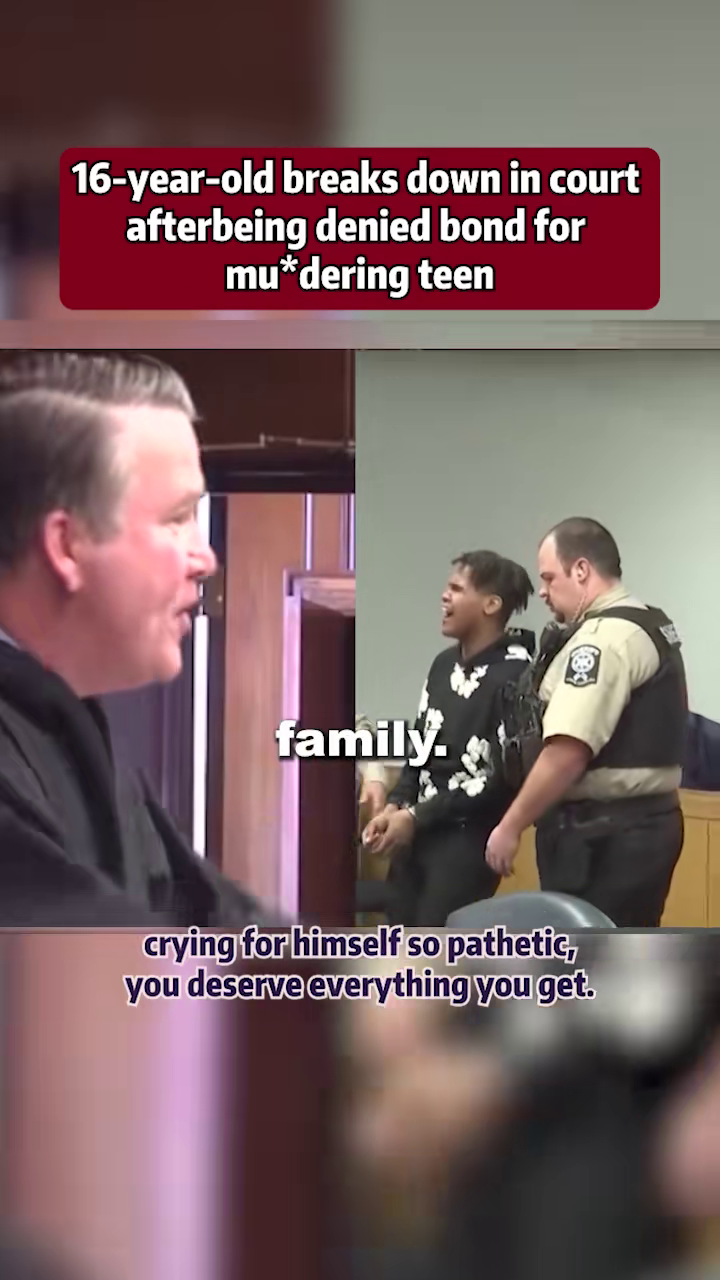
The video clip is jarring. A young man, barely out of childhood, erupting in a primal scream of despair as a judge delivers news that will effectively end his life as he knows it. 16-year-old Shawn Simpson, faced with the reality of being denied bond and prosecuted as an adult, collapsed in a Florida courtroom. This moment, captured and shared across social media platforms like TikTok and Facebook, has ignited a firestorm of debate regarding juvenile justice, the efficacy of “adult time for adult crime” laws, and the tragic cycle of violence that continues to claim young lives.
The Tragic Incident: A Life Cut Short
The legal ordeal began with a senseless tragedy. Shawn Simpson is charged with the fatal shooting of 15-year-old Aquavious Dawkins. The details of the case are heartbreaking: Dawkins, a well-regarded high school student and football player at Ashbrook High School, was simply running errands for his mother. As he walked along North Chester Street, he was ambushed. Three shots were fired, and Dawkins fell into a pool of blood. He died shortly after.
According to the victim’s family, the violence wasn’t random. Dawkins’ grandmother testified that Simpson had been harassing and threatening her grandson at school for some time. This history of bullying culminated in a fatal confrontation that has left one family mourning a promising young life and another watching their son face a potential lifetime behind bars.
The Shift in Legal Landscape: Charging Minors as Adults
The reason for Simpson’s visceral reaction in court lies in a recent shift in Florida’s legal landscape. He is being prosecuted under a law that allows 16 and 17-year-olds to be charged as adults for certain violent offenses. This “direct file” system gives prosecutors the discretion to move cases from juvenile court—where the focus is typically on rehabilitation and shorter sentences—to the adult criminal justice system, where penalties are far more severe.
For Simpson, the realization that he would not be granted bond and would instead be held in an adult facility awaiting a trial that could result in a life sentence was too much to bear. The courtroom footage shows him wailing and clinging to his lawyer, a stark contrast to the gravity of the crime he is accused of committing.
The Polarization of Public Opinion
The viral nature of the courtroom video has highlighted a deep divide in public sentiment. On one side are those who feel Simpson’s breakdown is “too little, too late.” They argue that if a teenager is old enough to pick up a firearm and take a life, they are old enough to face adult consequences. This perspective emphasizes justice for the victim and the need for a strong deterrent to curb rising rates of juvenile gun violence. “He didn’t cry for the boy he k*lled,” many commenters noted, “he’s only crying for himself.”
On the other side of the debate are those who see the video as a symptom of a broken system. Advocates for juvenile justice reform argue that the adolescent brain is not fully developed, particularly in areas related to impulse control and long-term consequences. They contend that placing minors in adult prisons—where they are exposed to hardened criminals and lack access to age-appropriate rehabilitation—is counterproductive and often leads to higher recidivism rates.
The Goal of Deterrence vs. The Reality of Rehabilitation
The central question raised by the Simpson case is whether harsher penalties actually deter juvenile crime. Proponents of “adult time for adult crime” believe that the threat of a life sentence will make young people think twice before pulling a trigger. However, many criminologists argue that teenagers, especially those living in high-crime areas or dealing with trauma, rarely weigh the legal consequences in the heat of a moment.
Furthermore, the “tough on crime” approach often ignores the systemic issues that contribute to juvenile delinquency, such as poverty, lack of educational resources, and easy access to firearms. While the legal system focuses on punishment after the fact, many argue that more resources should be directed toward intervention and prevention strategies that address these root causes.
The Impact on Families and Communities
Beyond the legal arguments, there is the devastating human toll. The Dawkins family has lost a son, a brother, and a grandson—a loss that no courtroom verdict can ever truly rectify. Meanwhile, the Simpson family is grappling with the reality that their child may spend the rest of his life in prison.
The ripple effects of such violence tear through communities. Schools like Ashbrook High are left to pick up the pieces, providing counseling for students traumatized by the loss of a peer and the arrest of another. It creates an atmosphere of fear and distrust that can persist for years.
A Call for a More Nuanced Conversation
The case of Shawn Simpson is not an isolated incident. It is a microcosm of a national struggle to balance justice for victims with the unique needs of youthful offenders. As the video continues to circulate, it serves as a grim reminder of the lives destroyed by gun violence and the complexities of the legal system’s response.
Is the “adult time” law a necessary tool for public safety, or is it a reflexive reaction that fails to address the underlying issues? There are no easy answers. However, the visceral reaction to Simpson’s courtroom breakdown suggests that we are still far from a consensus on how to handle the most serious crimes committed by the youngest members of our society.