
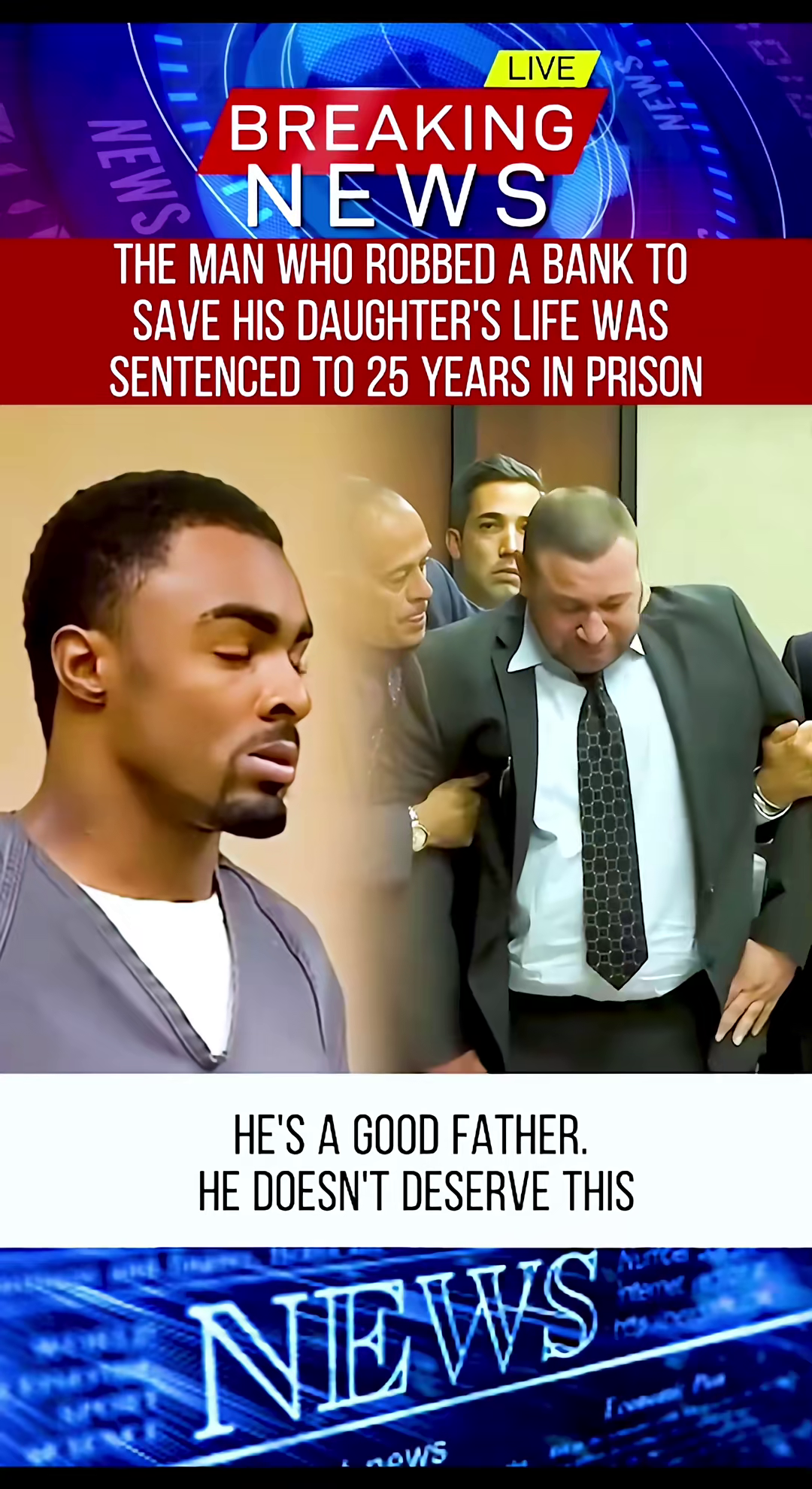
In August 2015, the quiet town of Southlyne, Michigan, was rocked by a robbery at the Vibe Credit Union. On the surface, it appeared to be a standard, albeit frightening, heist. A young man, later identified as 23-year-old Brian Randolph, walked into the bank and handed the teller a note demanding money. The note claimed he was armed with a shotgun.
While the heist was successful in the moment, it didn’t take long for the police to track Randolph down using surveillance footage. However, as the details of the motive began to emerge, the public’s perception of the “criminal” began to shift from fear to empathy.
A Father’s Worst Nightmare
Brian Randolph wasn’t looking for a life of luxury or a fast car. At home, he was a father to a one-year-old girl named Brailynn. Shortly before the robbery, Brailynn had been diagnosed with retinoblastoma, a rare and aggressive form of eye cancer.
The family’s world shattered, but things went from bad to worse when their health insurance was unexpectedly terminated. Brailynn needed chemotherapy and specialized treatments to ensure the cancer didn’t take her sight—or her life. The medical bills were mounting into the tens of thousands of dollars, a sum that Randolph, a young father, had no way of paying legally.
The Moment of Decision
Randolph’s family testified that he was “at his wit’s end.” He had reportedly reached out to various agencies for help but found himself trapped in a bureaucratic nightmare. In his mind, he was watching his daughter’s life slip away because of a dollar sign.
On that day in August, Randolph made the choice to enter the Vibe Credit Union. He didn’t hurt anyone, and no shots were fired, but the threat of a weapon was enough to constitute an armed robbery charge. He walked out with a sum of money that he intended to use solely for Brailynn’s medical treatments.
The Arrest and the Legal Battle
The Southlyne police worked quickly. Within days, Randolph was in custody. When his family spoke to the media, the story went viral. Social media users across the globe began debating the ethics of the situation. Many compared him to “John Q,” the fictional character who took a hospital hostage to save his son.
In court, Randolph was visibly distraught. He addressed the judge, stating, “I was only thinking about my daughter. I’m not a bad person at all.” He maintained that his intent was never to kll or harm anyone, but simply to provide for a child that society had seemingly abandoned.
The Sentence: 25 Years
Despite the public outcry for leniency, the law in Michigan is strict regarding armed robbery. The prosecution argued that while the motive was sympathetic, the act itself put innocent lives at risk. They argued that a “good motive” does not excuse a violent felony.
The judge ultimately sentenced Randolph to a lengthy prison term, with the potential of 25 years hanging over his head. The decision was a crushing blow to his family, who now had to face Brailynn’s cancer battle without a father and without the money he had tried to secure.
The Ethical Debate: Justice vs. Mercy
The Brian Randolph case raises uncomfortable questions about the American healthcare system and the criminal justice system.
-
The Healthcare Fail: How does a one-year-old lose insurance in the middle of a cancer battle?
-
The Justice System: Does the law have room for “necessity” when a life is on the line?
While some argue that Randolph should have found another way, others point out that when a child is dying, “another way” often doesn’t exist for those in poverty.
Where Are They Now?
Since the sentencing, Brailynn’s story has touched many. Crowdfunding efforts were launched to help cover her medical costs, ensuring that her father’s desperate act—while landing him in prison—at least brought the national attention necessary to save her life.
Brian Randolph remains incarcerated, serving his time while his daughter grows up. It is a stark reminder of the lengths a parent will go to for their child, and the rigid, often cold nature of the legal system when faced with the complexities of human desperation.
Conclusion
The story of the man who robbed a bank for his daughter serves as a modern-day tragedy. It is a tale of a father who sacrificed his freedom for his child’s survival. While the state of Michigan sees a bank robber, millions of people see a man who was pushed to the brink by a system that failed his family.
Whether you view him as a criminal or a hero, one thing is certain: the conversation surrounding Brian Randolph’s 25-year sentence is far from over. It forces us to ask ourselves: if it were your child’s life on the line, what would you do?