
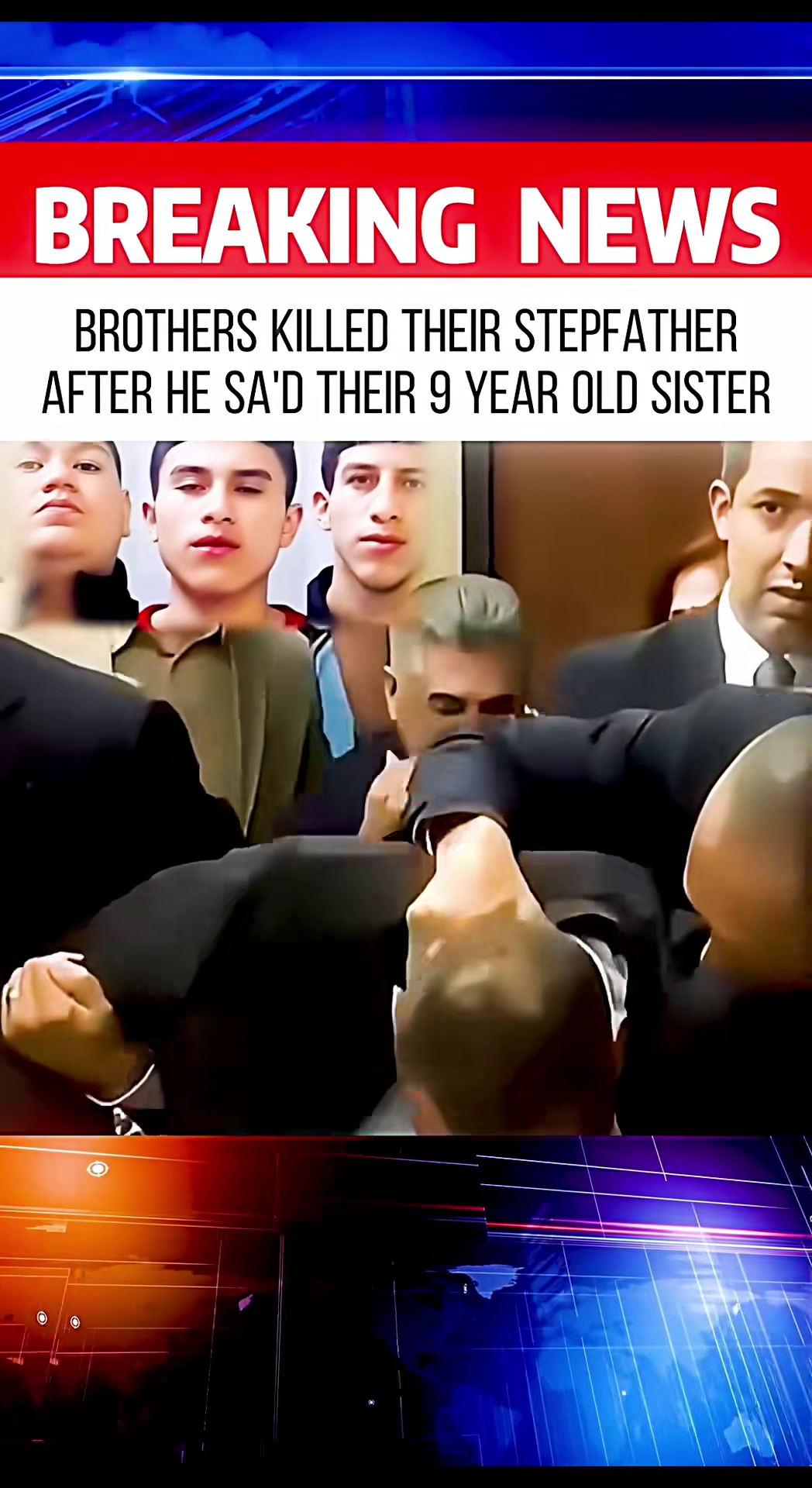
In the realm of true crime, few cases spark as much emotional division as those involving “vigilante justice.” In early 2022, the city of McAllen, Texas, became the center of a national conversation following the death of 42-year-old Gabriel Quintanilla. The suspects weren’t career criminals, but rather two brothers—Christian and Alejandro Trevino—who claimed they were acting to protect the most vulnerable member of their family.
The story that unfolded is a complex tapestry of trauma, brotherly protection, and the severe consequences of taking the law into one’s own hands.
The Allegations That Sparked the Fire
The timeline of this tragedy began when the Trevino brothers’ 9-year-old half-sister came forward with deeply disturbing allegations. She claimed that her stepfather, Gabriel Quintanilla, had been acting inappropriately and committing acts of abuse against her.
For 18-year-old Christian and 17-year-old Alejandro, the news was a breaking point. Witnesses and investigators noted that the brothers were overcome with a sense of duty to shield their sister from further harm. However, instead of waiting for the legal system to process the report, the brothers decided to confront Quintanilla directly.
The Confrontation and the Incident
According to police reports, the brothers, along with a friend, Juan Melendez, tracked Quintanilla to a residence. What began as a confrontation quickly escalated into a physical assault. Quintanilla reportedly attempted to flee the scene on foot, but the group caught up to him.
The situation turned fatal when the brothers allegedly used a vehicle to intercept him. During the encounter, Quintanilla was severely beaten. After the assault, the brothers reportedly placed him in the bed of a pickup truck and drove him to a remote location in McAllen, where his body was later discovered by a passerby.
The Arrest and the Dark Revelation
Following the discovery of the body, the McAllen Police Department moved quickly to identify the suspects. Christian and Alejandro Trevino, along with Melendez, were arrested and charged in connection with the death.
As the details emerged, a shocking piece of information came to light: Gabriel Quintanilla was already a wanted man. At the time of his death, there was an active arrest warrant out for him for continuous sexual abuse of a child. This revelation added a layer of complexity to the public’s reaction. To many, the brothers were heroes who had “cleaned up” a threat that the system had failed to contain. To the law, however, they were individuals who had committed a premeditated act of violence.
The Legal Battle: Aggravated Assault and Murder
The Trevino brothers faced serious charges, including capital murder and aggravated assault. In court, the defense highlighted the brothers’ age and the extreme emotional distress caused by the news of their sister’s abuse. They argued that the brothers weren’t looking to kll, but were consumed by a protective instinct that spiraled out of control.
The prosecution, while acknowledging the horrific nature of the stepfather’s alleged crimes, maintained that the rule of law must prevail. They argued that allowing citizens to execute their own form of justice leads to anarchy and that the brothers had multiple opportunities to stop the assault before it became fatal.
A Community Divided
The case ignited a firestorm on social media. Many residents in the Rio Grande Valley and across the country rallied behind the brothers, even starting petitions for their release. The sentiment was clear: “They did what any brother would do.”
On the other hand, legal experts warned of the dangerous precedent. If the state allows individuals to decide who deserves to live or die based on personal grievances—no matter how justified—the foundation of the justice system is compromised.
The Verdict and the Aftermath
The legal proceedings for the brothers resulted in varying degrees of sentencing. While the capital murder charges were a point of heavy litigation, the brothers eventually had to face the reality of their actions. The case served as a grim reminder that even when a motive is rooted in love and protection, the legal consequences of violence are absolute.
For the young sister at the center of it all, the tragedy is twofold. She suffered the original trauma of abuse and then had to witness her brothers—her protectors—be taken away to prison.
Conclusion: The Cost of Protection
The case of the Trevino brothers remains one of the most debated “vigilante” stories of the decade. it forces us to look into the mirror and ask: what is the limit of family loyalty?
While Gabriel Quintanilla’s alleged actions were heinous, the path chosen by the Trevino brothers led to a cycle of violence that left no winners. Their story stands as a cautionary tale about the intersection of trauma and justice, and the heavy price paid when one decides to become judge, jury, and executioner.